AlQalam Makki Font Free Download (TTF)

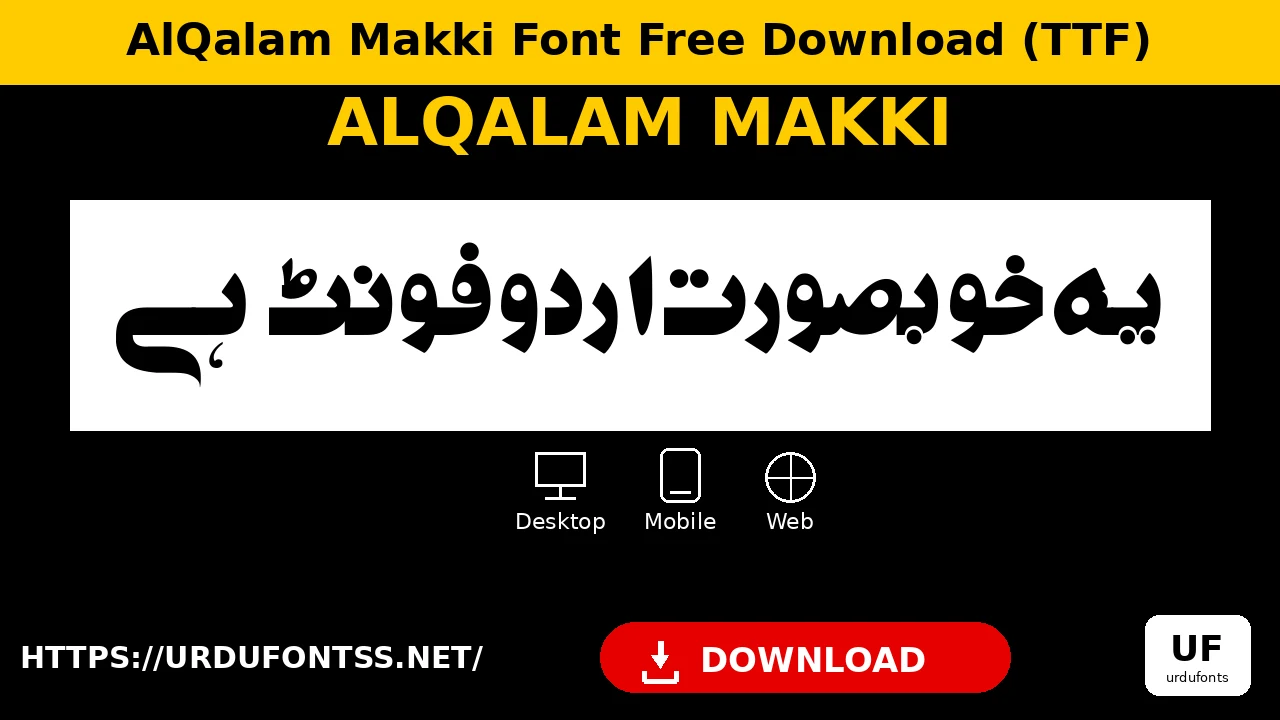
The AlQalam Makki font download gives you a very bold Nastaliq Urdu font for Urdu documents, books and poetry — heavy, solid Nastaliq letterforms from the AlQalam series, designed by Ishtiaq Ali Attari, with 34 of 37 Urdu letters in a single static TTF file. Download the verified TTF file below and install it on Windows, Mac, or in your favourite mobile design apps.
Font Overview
| Feature | Details |
| Font Name | AlQalam Makki |
| Designer | Ishtiaq Ali Attari |
| Style | Nastaliq (Urdu script), very bold with heavy, solid strokes (as rendered from the TTF) |
| Format | TTF |
| Language | Urdu (Arabic script) |
| Urdu Coverage | 34 of 37 Urdu letters (missing ڇ ږ ښ — see coverage note below) |
| License | No licence text in the font file — re-hosted under the owner’s 1 Nov 2026 approval for all urdufonts.net fonts |
| Works With | MS Word, InPage, Photoshop, Illustrator + mobile apps (PixelLab, Canva) |
| Platforms | Windows, Mac, Android (in apps), iPhone/iPad (via a font installer app) |
By KG · Font file verified 1 Nov 2026: family name, format and glyph count checked from the TTF itself.
File verified 1 Nov 2026: AlQalam Makki, TTF format, 497 glyphs, 124272 bytes, checked from the TTF itself. The download button above serves this verified TTF file.
Urdu coverage note: this font covers 34 of the 37 Urdu letters tested from the file itself. The three letters ڇ (U+0687), ږ (U+0696) and ښ (U+069A) are not in this font file, so words that use those letters will not display in this font — check your text before you publish.
Table of Content
Table of Contents
What Is AlQalam Makki?
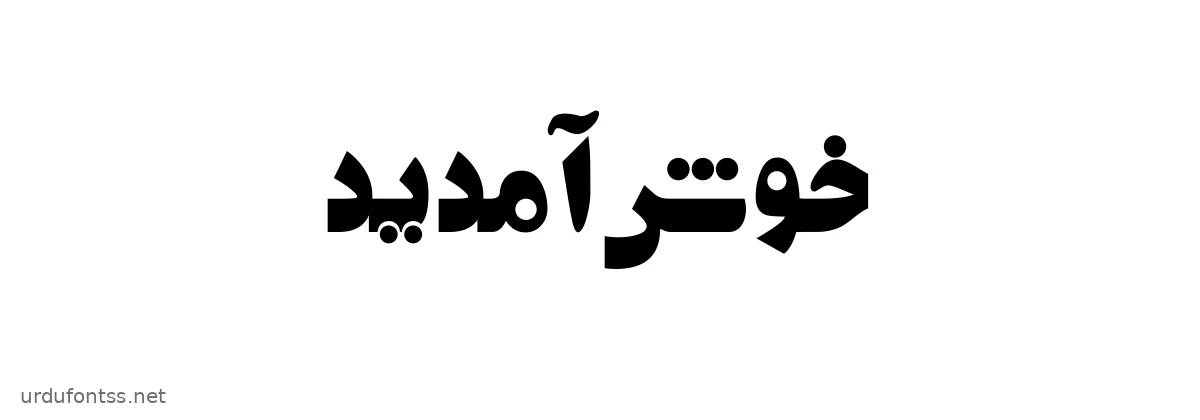
AlQalam Makki is a very bold Nastaliq face from the AlQalam series of Urdu fonts, designed by Ishtiaq Ali Attari: heavy, solid Nastaliq letterforms in the classic Nastaliq style. Its Urdu letter coverage was checked from the font file itself before this article was written: 34 of the 37 tested Urdu letters are present, and the three missing letters are named honestly in the coverage note above. It is a static TrueType font (version 1.10), so it installs like any ordinary font on Windows, Mac and in mobile design apps. The font file itself carries no licence text — its licence record is only a website address, and a copyright record, so the article states the licence position honestly. Makki sits alongside the other AlQalam faces already live on this site — AlQalam Taj Nastaleeq, AlQalam Rehan, AlQalam Shamil and AlQalam Shamshad — all verified from their own font files.
If you want to compare how it looks against other faces before installing, try the live Urdu font preview tool on this site, and browse the full Urdu fonts category for more Urdu fonts.

Features of AlQalam Makki
| Feature | What it means |
| Sloping Nastaliq letterforms | flowing shapes in the classic newspaper-and-book Nastaliq style. |
| 34 of 37 Urdu letters | covers most Urdu text; the three letters ڇ ږ ښ are not in this font file, so words with those letters will not render. |
| Standard TrueType file | a single Regular instance that installs and shows the same everywhere, with no variable-font behaviour to worry about. |
| TrueType format | installs on Windows and Mac and imports into mobile design apps. |
| Unicode encoding | standard Unicode code points, so typed Urdu text stays searchable and copyable. |
| Works in everyday apps | Word, InPage, Photoshop, Illustrator, PixelLab and Canva. |
How to Install AlQalam Makki on PC (Windows & Mac)
On Windows
- Download the TTF file using the button at the top of this page.
- Right-click the TTF file and choose Install (or Install for all users).
- Restart your app — Word, Photoshop or InPage — before the font appears in the font list.
- Select AlQalam Makki from the font list and type Urdu with right-to-left text direction switched on.
On Mac
- Download the TTF file using the button at the top of this page.
- Double-click the TTF file to open it in Font Book, then click Install Font.
- Restart your app before the font appears in the font list.
Full step-by-step help is in our PC install guide (Windows) and Mac install guide.
How to Use AlQalam Makki on Mobile Apps
Most font users today work on their phones, not on a desktop — so this section matters most. On Android and iPhone you use fonts inside design apps, not by changing the whole phone’s system font.
On Android (PixelLab, Canva and font-installer apps)
- Download the TTF file on your phone using the button at the top of this page.
- In PixelLab: open a text layer, tap the font option, choose My Fonts, and import the downloaded TTF file.
- In Canva: upload the font through the Brand Kit font upload on a plan that supports it, or use the in-app font list — see our Canva Urdu fonts guide for the exact steps.
- With a font-installer app: open the TTF in the installer app and follow its prompts to make the font available to supported apps.
- Type Urdu with an Urdu keyboard, keep the text direction right-to-left, and check that letters join correctly before exporting.
On iPhone and iPad (via a font installer app)
- Download the TTF file on your device using the button at the top of this page.
- Open it in a font-installer app and install the font profile when asked.
- Pick AlQalam Makki inside apps that support custom fonts, such as Canva, and type Urdu with right-to-left direction on.
If the font does not appear after installing, restart the app — and see our Android install guide and common Urdu font problems guide if letters show as boxes.
How to Use AlQalam Makki on a Website
- Download the TTF file using the button at the top of this page.
- Upload it to your website (for example, your theme’s fonts folder).
- Add an @font-face rule in your CSS pointing to the file, for example:
@font-face { font-family: 'AlQalam Makki'; src: url('fonts/alqalam-makki-font-download.ttf') format('truetype'); } - Apply it to Urdu text with
font-family: 'AlQalam Makki', serif;on your Urdu content, withdir="rtl"andlang="ur"on the Urdu blocks. - Test in Chrome and Firefox — Urdu shaping differs slightly between browsers, so check a real paragraph, not just a heading.
Best Uses for AlQalam Makki
- Urdu books, newspapers and poetry — a true Nastaliq for long Urdu reading and verse.
- Documents and articles — the steady baseline keeps long Urdu text readable.
- Social media graphics — made for PixelLab and Canva designs on mobile.
- Book and magazine headings — a clear heading face alongside body text; see our book publishing fonts guide for print tips.
- Educational material — steady letterforms are easy to read for students.
- Web headings — a modern face for website titles and menus; compare it with the faces in our best Urdu fonts for designers.
AlQalam Makki vs Jameel Noori Nastaleeq
Jameel Noori Nastaleeq is the benchmark most readers compare against. Both are Nastaliq faces. Jameel Noori Nastaleeq is the classic benchmark most Urdu readers know; AlQalam Makki follows the same Nastaliq tradition with its own character. Try both in the live preview tool and pick the one that reads better for your text. For more background on the styles, see our Urdu Nastaliq fonts history. Other faces on this site include AA Sameer Mosan and AA Sameer Rafiya.
Frequently Asked Questions (FAQs)
Is AlQalam Makki free to download?
Yes — the TTF file linked at the top of this page is available through the Google Drive link given here, and the file was verified from the TTF itself before this article was written. The font file itself carries no licence text — its licence record is only a website address. The file is re-hosted on the owner’s Google Drive under the owner’s 1 Nov 2026 approval for all urdufonts.net fonts.
What format is the AlQalam Makki download?
TTF (TrueType). It installs directly on Windows and Mac and imports into mobile design apps such as PixelLab and Canva — no conversion step is needed. It is a static font, not a variable font.
Does AlQalam Makki support all Urdu letters?
No — it covers 34 of the 37 Urdu letters tested from the font file. The three missing letters are ڇ (U+0687), ږ (U+0696) and ښ (U+069A). Words that use those letters will not render in this font, so check your text before you publish.
How do I install AlQalam Makki on Windows?
Download the TTF, right-click it and choose Install, then restart your app. The full steps are in our PC install guide.
Can I use AlQalam Makki on Android?
Yes, inside design apps. Import the TTF in PixelLab, Canva or a font-installer app — see the mobile section above and our Android install guide. Android does not change its system font on most phones, so use it inside apps.
Can I use AlQalam Makki on iPhone?
Yes, through a font-installer app: import the TTF, install the font profile, then pick the font inside apps that support custom fonts, such as Canva.
Can I use AlQalam Makki for commercial projects?
The font file itself carries no licence text, so no commercial-use permission is stated in the file. Check the owner’s terms before using it in commercial projects.
Final Words
AlQalam Makki is a solid pick when you need a very bold Nastaliq Urdu font that installs as a standard TTF on PC, Mac and mobile apps: download the verified file above, install it with the steps for your device, and test a real Urdu sentence before you publish — and remember the three missing letters named in the coverage note. Other fonts in this new series — AlQalam Kashif Outline, AlQalam Khat E Qirtas, AlQalam Khat E Sumbali and AlQalam Khawar — are already live, while AlQalam Ishtiaq, AlQalam Kaman, AlQalam Mehwish Ali, AlQalam Nabeel, AlQalam Naqsh, AlQalam Punjbi, AlQalam Sadaf, AlQalam Shakir and AlQalam Shahjahan are plain-text names here only and will be linked once their own articles are live. For more options already live, browse the Urdu fonts category, compare with Jameel Noori Nastaleeq, AA Sameer Mosan, AA Sameer Rafiya or Nafees Nastaleeq, or see our best Urdu fonts for designers — and if you work with InPage documents, our Unicode to InPage converter keeps your converted text moving between formats.